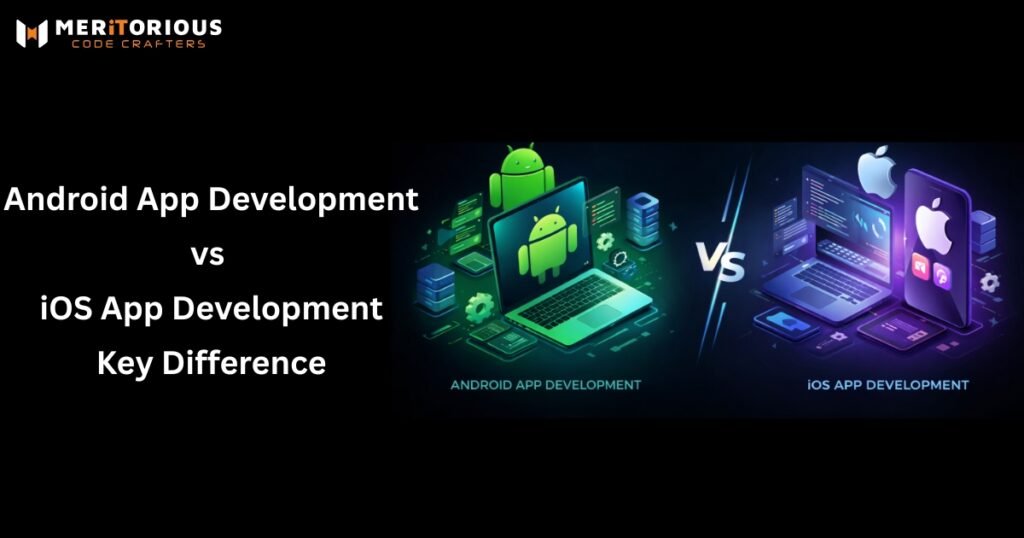
In today’s digital-first world, mobile apps play a crucial role in business growth and customer engagement. When planning a mobile application, one of the first and most important decisions is choosing between Android app development and iOS app development. Both platforms are powerful, mature, and widely used, but they differ in many ways. Understanding these differences will help you select the right platform based on your business goals, target audience, and budget.
1. Platform Overview
Android apps are developed for devices running the Android operating system, which is owned by Google. Android powers smartphones from multiple manufacturers such as Samsung, Xiaomi, and OnePlus, giving it the largest global market share.
iOS apps, on the other hand, are developed exclusively for Apple devices like the iPhone and iPad. The iOS ecosystem is controlled entirely by Apple, which ensures a consistent user experience across devices.
2. Development Languages & Tools
One major difference between Android app development and iOS app development lies in programming languages and tools.
- Android App Development
Android apps are primarily developed using Kotlin and Java, with Android Studio as the official IDE. Android offers more flexibility and customization options for developers. - iOS App Development
iOS apps are developed using Swift or Objective-C, with Xcode as the official development environment. Apple’s tools are known for stability and performance but offer less flexibility compared to Android.
3. Development Cost & Time
Cost is a key factor when choosing between Android and iOS.
- Android app development often takes more time due to device fragmentation. Developers must test apps on multiple screen sizes, hardware configurations, and OS versions.
- iOS app development is generally faster and more predictable because of Apple’s limited range of devices and standardized hardware.
As a result, Android apps can sometimes be more expensive to develop and maintain, while iOS apps may offer a quicker time-to-market.
4. User Experience & Design Guidelines
Both platforms follow strict UI/UX standards, but their design philosophies differ.
- Android UI/UX focuses on customization and flexibility. Material Design allows vibrant layouts, animations, and personalized experiences.
- iOS UI/UX emphasizes simplicity, consistency, and minimalism. Apple’s Human Interface Guidelines ensure a clean and intuitive design.
If your app relies heavily on customization, Android may be a better fit. If consistency and premium feel are priorities, iOS stands out.
5. Market Share & Target Audience
Android dominates the global smartphone market, especially in developing countries. It is ideal for businesses targeting a large and diverse user base.
iOS has a smaller market share but a more premium user base, particularly in countries like the US, UK, and Australia. iOS users are generally more willing to pay for apps and in-app purchases.
6. App Monetization
Monetization strategies also differ between platforms.
- Android apps rely more on ads and freemium models.
- iOS apps typically generate higher revenue through paid apps and in-app purchases.
If revenue generation is your main objective, iOS may offer better returns, while Android provides wider reach.
7. App Approval & Security
- Android’s app approval process is faster and more flexible, allowing quicker updates.
- iOS follows a strict app review process, which can take longer but ensures higher security and quality standards.
Apple’s ecosystem is considered more secure, while Android provides greater freedom for developers.
Conclusion
Both Android and iOS app development have their own advantages and limitations. Android is ideal for reaching a broad audience with customizable features, while iOS is best suited for premium apps with higher revenue potential. The right choice depends on your business goals, budget, target market, and timeline.
For maximum impact, many businesses choose cross-platform development or build apps for both platforms. Evaluating your needs carefully will help you make the best decision and ensure long-term success for your mobile app. 🚀