Key Takeaways
- Django is a full-featured, "batteries-included" framework with a built-in ORM, admin panel, and authentication, while Flask is a lightweight microframework that gives you only the essentials and lets you choose the rest.
- Flask has a gentler learning curve for beginners since there's less to learn upfront, but Django's structure pays off once a project grows past a few routes and models.
- Django scales well for complex, data-heavy applications out of the box, while Flask scales just as well but requires you to manually add the components Django includes by default.
- Both frameworks support REST API development, but Flask's minimal footprint often makes it faster to spin up a small, focused API, while Django REST Framework suits larger APIs with complex data relationships.
- The right choice depends on project size and team preference: Django fits structured, long-term applications; Flask fits smaller projects, prototypes, and teams that want full control over their stack.
Django suits structured, data-heavy applications that benefit from built-in tools like an ORM, admin panel, and authentication system, while Flask suits smaller projects, APIs, and teams that want to choose their own components rather than work within a fixed structure. Neither framework is objectively better; each is built around a different philosophy for building web applications.
This distinction matters more than most comparisons let on. Teams sometimes choose based on popularity rather than project fit, then spend months fighting a framework that doesn't match how their application actually needs to grow. If you're weighing your options forpython web application development, understanding what each framework actually does differently is the starting point.
What's the Core Difference Between Django and Flask?
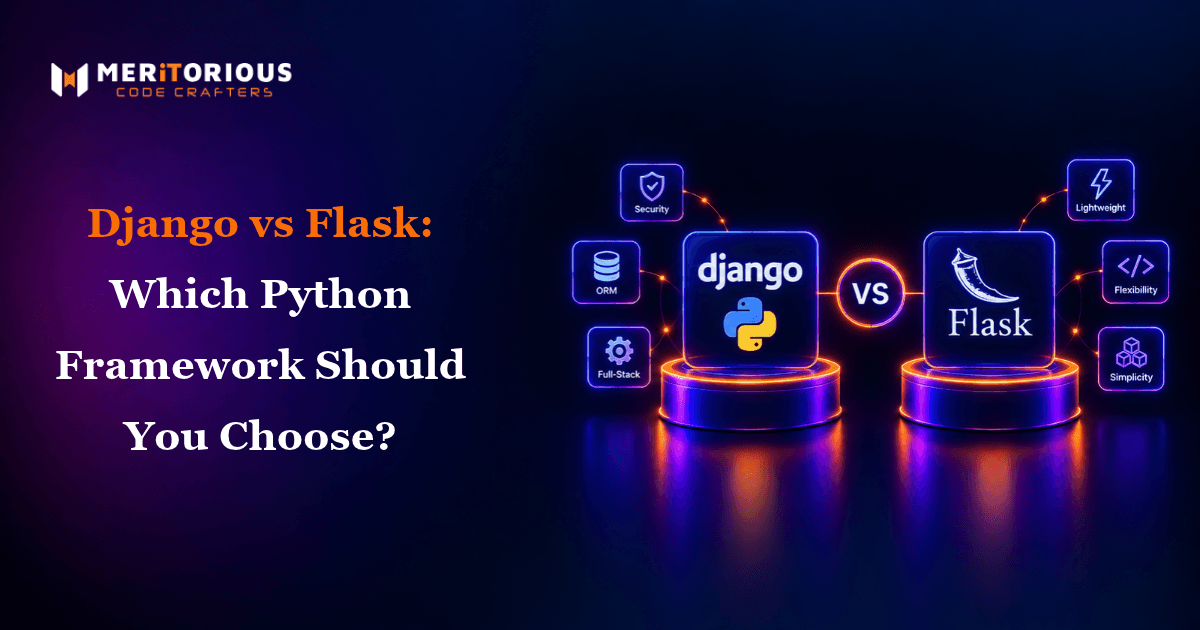
Django is a full-stack framework that includes an ORM, admin interface, authentication, and templating system by default, while Flask is a microframework that provides routing and a development server, leaving you to add other components as needed. This is the single most important distinction to understand before comparing anything else.
| Factor | Django | Flask |
|---|---|---|
| Type | Full-stack framework | Microframework |
| Built-in ORM | Yes | No (add-on required) |
| Admin panel | Yes, built in | No |
| Templating | Django Template Language | Jinja2 |
| Flexibility | Structured, opinionated | Highly flexible |
| Setup time | Longer initial setup | Minimal initial setup |
Django's structure comes from its philosophy of including everything a typical web application needs. Flask takes the opposite approach, giving developers a minimal core and letting them assemble the rest, whether that means adding SQLAlchemy for database work or a separate library for authentication.
Django vs Flask for Beginners: Which Is Easier to Learn?
Flask is generally easier for beginners because there's less to learn before building something functional, while Django requires understanding its project structure, ORM, and conventions before you can build much at all. That said, Django's learning curve pays off faster than it might seem, since its conventions prevent many of the structural mistakes beginners make when assembling a stack themselves.
Why Flask Feels Simpler at First
A basic Flask application can run in a single file with just a few lines of code, which makes it approachable for anyone learning Python web development. There's no requirement to understand an ORM, a templating engine, or a project folder structure before seeing results.
Why Django's Curve Evens Out
Django asks more of you upfront, including its ORM and app structure, but once learned, that structure removes a lot of the decision-making Flask developers have to do project by project. Businesses evaluating candidates for either framework often referencePython developer skills to test before hiringto gauge whether a candidate's comfort level matches the framework's demands.
Django vs Flask Performance: Is One Faster?
Flask generally has lower overhead and can respond faster in minimal, low-complexity applications, while Django's performance is comparable once caching, query optimization, and production configuration are applied correctly. Raw framework speed matters far less in practice than how well the application is architected.
Flask's minimal footprint means less code executes per request by default, which can show up as marginally faster response times in simple use cases. Django, however, includes tools like its ORM's query optimization features and built-in caching framework that, when used properly, close this gap for most real-world applications. The performance difference that matters most in production usually comes from database design and server configuration, not the framework itself.
Django vs Flask Scalability: Which Handles Growth Better?
Django scales well for complex applications because its structure and built-in ORM support larger codebases and teams without requiring architectural decisions from scratch, while Flask scales just as effectively but requires deliberately adding structure as the application grows. Scalability with Flask is achievable; it simply takes more upfront planning.
Large platforms have been built successfully on both frameworks. The difference shows up in team coordination: Django's conventions make it easier for multiple developers to work on the same codebase consistently, while Flask's flexibility means a growing team needs to agree on its own conventions early, or risk inconsistency across the project.
Django vs Flask for REST API Development
Both frameworks support REST API development effectively, but Flask's minimal setup makes it well-suited for small, focused APIs, while Django REST Framework is better suited for large APIs involving complex data models and relationships. The right choice often comes down to how much the API needs to do beyond serving data.
A small internal API with a handful of endpoints can be built quickly in Flask without unnecessary overhead. A large-scale API serving multiple client applications, with complex permissions and nested data relationships, generally benefits from Django REST Framework's built-in serialization and authentication handling.
Building something along these lines?
Tell us what you have in mind. We will come back with scope, stack and a realistic timeline.
Flask or Django for Startups: Which Should You Choose?
Startups building a simple MVP or a small API often move faster with Flask, while startups planning a data-heavy application with user accounts, an admin interface, and complex relationships from day one typically save time with Django. The right answer depends on how much the product is expected to grow, and how soon.
A startup testing a narrow idea with a small feature set can launch faster on Flask and add structure later if the product gains traction. A startup building a platform with clear plans for user management, content administration, and multiple data models from the outset often saves significant rework by starting on Django instead of retrofitting those features into Flask later.
Django vs Flask for Enterprise Apps
Django is generally the stronger fit for enterprise applications due to its built-in security features, structured architecture, and admin tooling, which reduce the custom development needed for common enterprise requirements. Flask remains viable for enterprise use, particularly for specific microservices within a larger system, but requires more deliberate setup to match Django's out-of-box capabilities.
Enterprises often use both frameworks together in practice: Django for the core application and admin-heavy modules, and Flask for lightweight internal services or specific API endpoints that don't need Django's full feature set. This hybrid approach lets teams get structure where it matters most and simplicity where it doesn't.
How to Decide Between Django and Flask
Base your decision on three questions: How complex will the application become? Does the team want built-in conventions or full control? And how much of the work involves things Django already provides, like an admin panel or user authentication? If most answers point toward complexity and built-in tooling, Django is the safer choice. If the project is small, focused, or highly custom, Flask offers more room to build exactly what's needed without extra weight.
Teams unsure which framework fits their roadmap, or unsure which developers to bring in for either, can reviewwhere to hire Python developers in 2026 for guidance on sourcing the right skill set for the framework decision.
Frequently Asked Questions
1. Is Django or Flask better for beginners?
Flask is generally easier to start with since a basic app can run with minimal code and no required project structure. Django has a steeper initial learning curve due to its ORM and conventions, but that structure often prevents common mistakes as projects grow.
2. Which is faster: Django or Flask?
Flask has lower overhead and can respond slightly faster in simple applications due to its minimal footprint. Django's performance is comparable in production once caching, query optimization, and proper configuration are applied, so the gap rarely matters at scale.
3. Should I use Django or Flask for a startup?
It depends on your product's expected complexity. Flask suits a simple MVP or narrow feature set that needs to launch quickly. Django suits startups planning a data-heavy platform with user accounts and admin tools from the start, since it saves rework later.
4. Can Django and Flask both be used for REST APIs?
Yes. Flask is well-suited for small, focused APIs due to its minimal setup, while Django REST Framework is better for large APIs with complex data models, relationships, and built-in authentication needs.
5. Which framework is better for enterprise applications?
Django is generally the stronger fit for enterprise applications due to its built-in security features, structured architecture, and admin tooling. Flask remains useful within enterprise systems, particularly for lightweight microservices alongside a larger Django-based application.
Conclusion: Match the Framework to the Project, Not the Trend
Django vs Flask isn't a question of which framework is better overall. It's a question of which one fits your project's complexity, timeline, and team preferences. Django suits structured, long-term applications that benefit from built-in tooling, while Flask suits smaller projects and teams that want flexibility without extra overhead.
As a mobile and web development company India, Meritorious CodeCrafters works with both frameworks and helps businesses choose the right one for their specific requirements. You can bring in the best Django developers in India for structured, full-featured applications, orhire Python developers in India for Flask-based projects and APIs. For products spanning both frontend and backend, dedicated full stack developers in India can handle the complete build. Discuss your project to find the right framework and team for your goals.