Key Takeaways
- React Server Components and concurrent rendering, introduced through React 19, address the two biggest historical criticisms of React: bundle size and unnecessary re-renders.
- React's ecosystem maturity, not novelty, is its main advantage. Thousands of production-tested libraries, hiring pools, and integration patterns exist that newer frameworks haven't built up yet.
- Large enterprises and product teams continue standardizing on React because switching frameworks carries migration cost and retraining risk that most businesses can't justify without a clear performance gap.
- Job market data consistently shows React among the most requested frontend skills, keeping developer supply and long-term hiring options strong for businesses building on it.
- React isn't winning by being the newest option. It's winning by evolving fast enough to stay competitive while keeping the backward compatibility that protects existing investments.
Is React Still Relevant in 2026?
Yes, React remains one of the most relevant and widely used frontend libraries in 2026. Backed by Meta, continuously updated with features like React Server Components and concurrent rendering, and supported by the largest frontend ecosystem in the industry, React continues to power a large share of new and existing production applications. Businesses evaluating a frontend stack today, whether through in-house teams or by choosing tohire React JS developers in India, are still building on a technology with active long-term investment behind it.
The question isn't really whether React still works. It clearly does. The real question is whether it still makes sense as a default choice when newer, purpose-built frameworks exist. That answer depends on what's actually changed under the hood, not just how the framework is perceived.
Why Is React Still Popular in 2026?
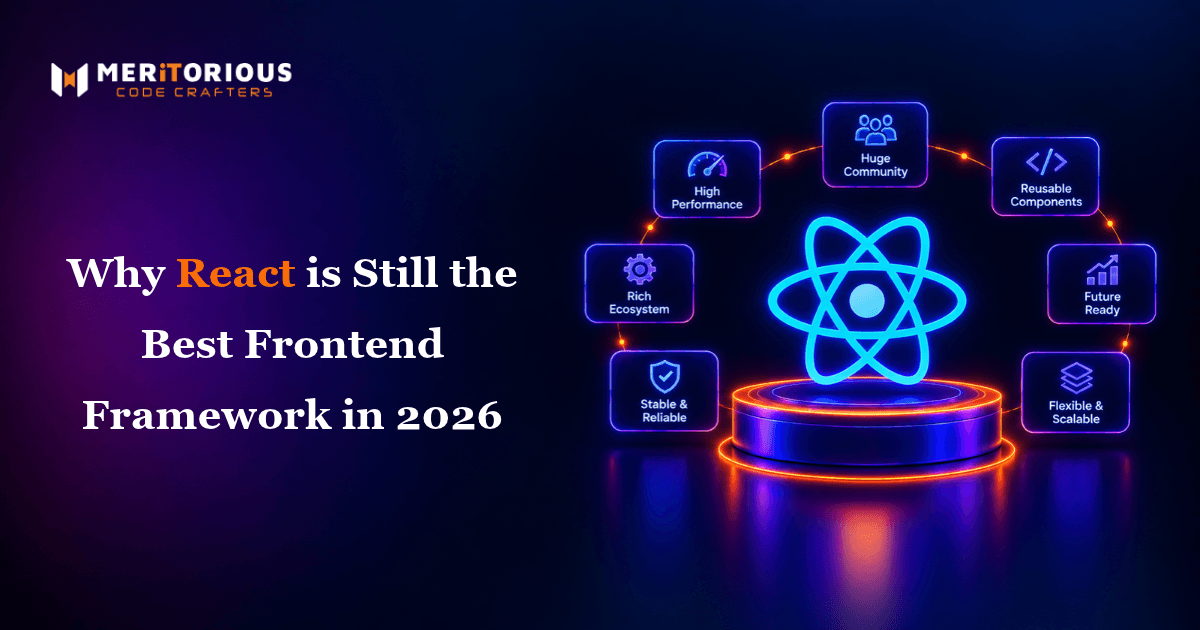
React remains popular because it keeps evolving to solve its own historical weaknesses while preserving the massive ecosystem and hiring pool built around it over more than a decade. Few frontend tools offer this combination of active innovation and installed-base stability at the same time.
The Ecosystem Advantage
A library is only as useful as what's built around it. React's ecosystem includes mature state management tools, testing libraries, component libraries, and integration patterns refined over years of production use. Teams building complex applications rarely start from zero; they draw on solutions the community has already tested at scale. Businesses that need to move fast often lean onJavaScript Development Services precisely because this ecosystem depth shortens build time compared to assembling equivalent tooling around a newer framework.
React's Job Market Position
Frontend hiring data continues to show React as a top-requested skill across startups, agencies, and enterprises alike. This isn't just a developer convenience; it directly benefits businesses too. A larger talent pool means shorter hiring cycles and more competitive rates. Companies comparing regional hiring options can review the cost of hiring React.js developers to see how ecosystem maturity and talent availability affect budget planning.
Concepts That Outlast the Framework
The virtual DOM concept popularized by React, rendering UI updates efficiently by comparing changes before touching the actual browser DOM, has influenced how much of the frontend ecosystem approaches rendering performance. Developers who understand this deeply carry that knowledge forward regardless of which specific tool they use next.
Why Do Big Companies Still Use React?
Large organizations continue standardizing on React because switching frontend technologies carries substantial migration cost, retraining overhead, and short-term productivity loss that's difficult to justify without a compelling performance or capability gap. For most enterprises, the cost of switching outweighs the marginal benefit of a newer alternative.
This is a practical, not sentimental, decision. Enterprise engineering leadership generally avoids technology churn unless there's a clear business case. React's continued feature development, including Server Components and concurrent rendering, has kept that business case from materializing for most teams already invested in the ecosystem. Businesses restructuring their frontend strategy or evaluating team composition can review how to choose the right React or Next.js team to align technical decisions with actual business goals rather than trend-driven choices.
Backward Compatibility Protects Existing Investment
Companies with large, established React codebases can adopt new features incrementally rather than rewriting applications from scratch. This matters more than it sounds. A framework that forces disruptive migrations every major version creates real business risk. React's approach to backward compatibility has consistently let teams upgrade without breaking production systems.
What's New in React 19? Key Features Driving 2026 Adoption
React 19 introduced React Server Components, improved concurrent rendering, and simplified data fetching patterns, directly addressing the performance and complexity criticisms that fueled "is React outdated" discussions in prior years. These aren't incremental tweaks; they change how React applications are structured at a fundamental level.
React Server Components Explained
React Server Components allow components to render on the server and send only the necessary output to the browser, reducing the JavaScript bundle the client has to download and execute. This directly tackles one of React's long-standing weaknesses: apps that shipped too much client-side code for content that didn't need to be interactive. Server Components let teams keep static or data-heavy sections server-rendered while reserving client-side interactivity for the parts that actually need it.
Concurrent Rendering, In Practical Terms
Concurrent rendering lets React prepare multiple versions of the UI in the background and prioritize what the user sees first, preventing slow updates from blocking the interface. For applications with heavy data loads, such as dashboards or search-heavy interfaces, this translates into a more responsive feel without developers manually optimizing every render cycle.
Building something along these lines?
Tell us what you have in mind. We will come back with scope, stack and a realistic timeline.
Is React Worth Learning in 2026?
React is still worth learning in 2026 because it remains one of the most requested frontend skills in job listings, and the underlying concepts, particularly the virtual DOM and component-based architecture, transfer directly to how most modern frontend tools operate. Developers who learn React well also pick up patterns that apply well beyond React itself.
React's Job Market Position
Frontend hiring data continues to show React as a top-requested skill across startups, agencies, and enterprises alike. This isn't just a developer convenience; it directly benefits businesses too. A larger talent pool means shorter hiring cycles and more competitive rates. Companies comparing regional hiring options can review the cost of hiring React.js developers to see how ecosystem maturity and talent availability affect budget planning.
Concepts That Outlast the Framework
The virtual DOM concept popularized by React, rendering UI updates efficiently by comparing changes before touching the actual browser DOM, has influenced how much of the frontend ecosystem approaches rendering performance. Developers who understand this deeply carry that knowledge forward regardless of which specific tool they use next.
Why Do Big Companies Still Use React?
Large organizations continue standardizing on React because switching frontend technologies carries substantial migration cost, retraining overhead, and short-term productivity loss that's difficult to justify without a compelling performance or capability gap. For most enterprises, the cost of switching outweighs the marginal benefit of a newer alternative.
This is a practical, not sentimental, decision. Enterprise engineering leadership generally avoids technology churn unless there's a clear business case. React's continued feature development, including Server Components and concurrent rendering, has kept that business case from materializing for most teams already invested in the ecosystem. Businesses restructuring their frontend strategy or evaluating team composition can review how to choose the right React or Next.js team to align technical decisions with actual business goals rather than trend-driven choices.
Is React Fatigue Real, or Is It Just Adoption at Scale?
The perception of "React fatigue" largely reflects the ecosystem's size and the number of tooling choices developers must navigate, not a decline in the framework's core relevance. A library with this much surrounding tooling will always generate some decision fatigue; that's a byproduct of popularity, not a sign of obsolescence.
It's worth separating two different conversations: frustration with configuration choices (build tools, state management options, routing patterns) versus genuine doubts about React's technical direction. The first is a real, valid critique of ecosystem sprawl. The second doesn't hold up well against React's continued feature investment and adoption numbers.
What Does React's Continued Investment Signal for 2026 and Beyond?
Meta's ongoing investment in React, evidenced by major releases like React Server Components and concurrent rendering, signals continued long-term commitment rather than a framework coasting on past popularity. This kind of sustained development is one of the clearest indicators of a technology's staying power.
For businesses planning multi-year product roadmaps, this matters more than feature comparisons on any single day. A framework backed by continuous architectural investment is a safer long-term bet than one that's technically impressive today but lacks a clear development trajectory.
Frequently Asked Questions
1. Is React still relevant in 2026?
Yes. React remains one of the most widely adopted frontend libraries in 2026, backed by continued development from Meta, including React Server Components and concurrent rendering. Its ecosystem maturity and enterprise adoption keep it a leading choice for new and existing projects.
2. Is React becoming outdated compared to newer frameworks?
No. While newer frameworks introduce specific innovations, React has kept pace by addressing its own historical weaknesses, particularly bundle size and rendering performance, through features like Server Components. Its ecosystem depth also remains unmatched by most newer alternatives.
3. Is React still worth learning in 2026?
Yes. React remains one of the most requested frontend skills in job markets, and its core concepts, like component-based architecture and the virtual DOM, apply broadly across modern frontend development, making the learning investment valuable beyond React itself.
4. What are React Server Components and why do they matter?
React Server Components let parts of an application render on the server, sending less JavaScript to the browser. This improves load performance and reduces the client-side workload, directly addressing long-standing criticism of React apps shipping too much unnecessary code.
5. Why do large companies still choose React over newer frameworks?
Large companies continue using React because switching frontend technologies involves significant migration cost, developer retraining, and short-term risk. Without a compelling performance or capability gap, most enterprises find it more practical to continue building on React's established, actively developed foundation.
Conclusion: React Isn't Just Surviving in 2026, It's Still Leading
React's relevance in 2026 comes from genuine technical evolution, not inertia. Server Components, concurrent rendering, a mature ecosystem, and sustained enterprise adoption all point to a framework still actively solving real problems rather than one coasting on legacy reputation. As a trusted IT consulting partner, Meritorious CodeCrafters helps businesses build and scale frontend systems on the technology that fits their goals, React included.Request a free consultation to discuss your frontend roadmap.