Key Takeaways
- PHP still powers a large share of the web through WordPress and other CMS platforms, making it a strong default for content-driven and small business sites, while Python's broader use cases extend into data-heavy and AI-integrated applications.
- Python generally has a gentler learning curve due to cleaner syntax, but PHP's setup for basic web hosting remains simpler for developers focused purely on getting a site live quickly.
- Both languages scale well in production, but PHP frameworks like Laravel and Python frameworks like Django take different approaches to structure, with Django enforcing more convention by default.
- For ecommerce, PHP's dominance comes largely from WordPress and WooCommerce's market share, while Python is often chosen when the store needs custom logic, data processing, or integration with machine learning features.
- The choice between PHP and Python should follow the project type: content management and existing WordPress ecosystems favor PHP, while data-intensive, API-first, or AI-adjacent projects favor Python.
PHP remains the stronger choice for content-driven websites and projects built on WordPress or similar CMS platforms, while Python fits better for data-heavy applications, custom backend logic, and projects that may need AI or machine learning integration down the line. Neither language is outdated or objectively superior; the right pick depends on what the project actually needs to do.
This decision often gets settled by habit rather than genuine project fit. Teams comparing platforms for a new build, particularly one involving structured content, frequently start with a Web CMS Development company conversation before locking in a language, since the CMS requirements often determine the language choice more than any other factor.
What's the Core Difference Between PHP and Python?
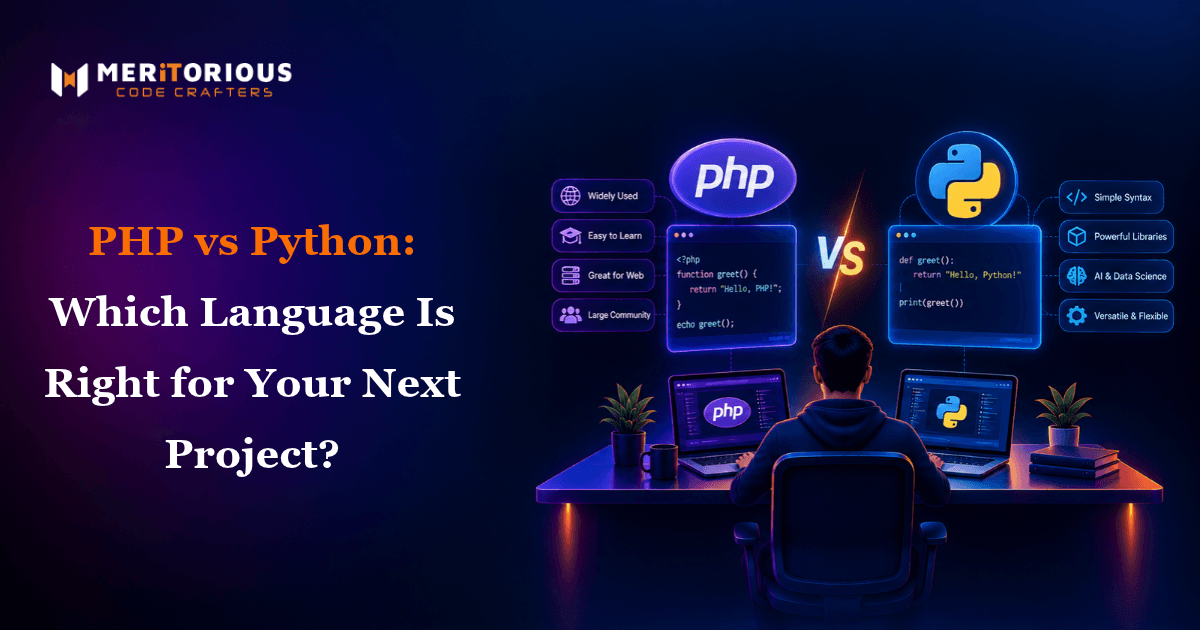
PHP is a server-side scripting language built specifically for web development and embedded directly into HTML, while Python is a general-purpose language used across web development, data science, automation, and AI, with web frameworks like Django built on top of it. This difference in original purpose still shapes how each language is used today.
| Factor | PHP | Python |
|---|---|---|
| Primary use case | Web development | General-purpose |
| Popular framework | Laravel | Django |
| CMS dominance | WordPress, Joomla, Drupal | Limited CMS presence |
| Syntax style | C-like, web-embedded | Clean, indentation-based |
| Beyond web use | Limited | Data science, AI, automation |
| Typical database pairing | MySQL | PostgreSQL, MySQL |
PHP was designed from the outset to generate dynamic web pages, which is why it integrates so tightly with HTML and why so much of the CMS ecosystem, including WordPress, is built on it. Python's general-purpose design means it's equally comfortable powering a web backend, a data pipeline, or a machine learning model, which gives it reach PHP doesn't have outside of the web.
PHP vs Python for Web Development: Which Performs Better?
Python and PHP both perform well for modern web development when paired with the right framework, but PHP has historically been optimized specifically for web request handling, while Python's performance depends more on how the application and framework are configured. In practice, the performance gap rarely decides the outcome for typical business applications.
Framework Comparison: Laravel vs Django
Laravel, PHP's most popular modern framework, provides elegant syntax and built-in tools for routing, authentication, and database work, similar in philosophy to Django's "batteries-included" approach on the Python side. Django enforces slightly more structure and convention out of the box, which some teams find speeds up development, while Laravel offers a bit more flexibility in how a project is organized. Businesses set on the Python route for this comparison can hire Django developers in India to build on a framework with strong conventions already in place.
Where PHP Still Has an Edge
PHP's tight integration with widely available, low-cost hosting environments makes it simple to get a basic site running without complex server configuration. This remains one of PHP's practical advantages for smaller projects where infrastructure simplicity matters more than architectural flexibility.
PHP vs Python Learning Curve: Which Is Easier to Learn?
Python generally has a gentler learning curve due to its clean, readable syntax that closely resembles plain English, while PHP's syntax, closer to C-style languages, takes a bit more adjustment for complete beginners. That said, PHP's web-specific focus means beginners can often build a working page faster, even if the underlying syntax takes longer to feel natural.
Python's readability advantage compounds over time, since code that's easier to read is also easier to maintain and debug months later, particularly valuable for teams with rotating contributors. PHP's more specific, web-focused nature means less conceptual overhead when the only goal is building web pages, without needing to understand Python's broader general-purpose capabilities upfront.
PHP vs Python for Ecommerce: Which Should You Choose?
PHP dominates ecommerce primarily through WordPress and WooCommerce's massive market share, making it the practical default for standard online stores built on existing CMS infrastructure, while Python is typically chosen when a store needs custom logic, complex data processing, or integration with recommendation engines and other data-driven features. Most small to mid-sized stores don't need what Python adds beyond what WooCommerce already provides.
A standard product catalog with typical checkout needs is usually served well and quickly through WordPress and WooCommerce, PHP's territory. A store requiring custom pricing logic, real-time inventory syncing across multiple systems, or product recommendations powered by user behavior data often benefits from Python's broader ecosystem, particularly if machine learning-driven personalization is part of the roadmap.
Building something along these lines?
Tell us what you have in mind. We will come back with scope, stack and a realistic timeline.
PHP vs Python for Startups: Which Moves Faster?
Startups building on an existing CMS or a straightforward content-driven site typically move faster with PHP, while startups building a custom product with data processing, API integrations, or AI features typically move faster with Python. Speed depends on which language's existing tooling matches what the product actually needs to do.
A startup launching a marketing site, blog, or basic online store benefits from PHP's mature CMS ecosystem, avoiding the need to build content management functionality from scratch. A startup building a SaaS product with custom business logic, data pipelines, or plans to add AI-driven features later often finds Python's ecosystem, including its Python software development tooling, better aligned with where the product is headed.
PHP vs Python for Enterprise Projects
Enterprise projects with existing PHP-based systems, particularly those built around WordPress, Drupal, or custom Laravel applications, often continue with PHP for consistency and lower migration risk, while enterprises building new, data-intensive platforms increasingly choose Python for its broader ecosystem and integration options. The decision in enterprise contexts is shaped heavily by what's already in production.
Large organizations rarely choose a language in isolation from their existing systems. An enterprise with a mature PHP codebase and trained internal teams typically continues investing in PHP rather than absorbing the cost and risk of a language migration. An enterprise building a new platform from scratch, especially one requiring data processing or future AI capability, has more freedom to choose Python without that legacy constraint. Businesses weighing backend options more broadly can review the Python vs Node.js backend comparison for additional context on how these decisions play out across different backend technologies.
PHP vs Python Security: How Do They Compare?
Both PHP and Python can be built securely when following current best practices, but PHP's long history and widespread CMS use, particularly WordPress plugins, means it's a more frequent target for automated attacks, requiring diligent patching and plugin management. Python's smaller web-specific attack surface, combined with frameworks like Django that include security features by default, gives it a somewhat lower baseline risk for custom-built applications.
This difference has more to do with ecosystem exposure than the languages themselves. A PHP site running dozens of third-party WordPress plugins carries more potential vulnerabilities than a custom Python application with a tightly controlled set of dependencies, regardless of which language is inherently "safer."
How to Decide Between PHP and Python for Your Project
Base the decision on three questions: Are you building on or around an existing CMS like WordPress? Does the project need data processing, APIs, or future AI integration? And does your team already have stronger expertise in one language? If the answers point toward content management and existing web infrastructure, PHP is usually the faster, more practical route. If the project needs custom logic, data-heavy features, or room to grow into AI capabilities, Python is generally the better long-term investment.
Conclusion: Choose Based on Project Needs, Not Familiarity
PHP vs Python isn't a question of which language is better overall. PHP remains strong for content-driven websites and CMS-based projects, particularly anything built around WordPress, while Python fits better for custom applications, data-heavy backends, and projects with future AI ambitions. The right choice follows what your project actually needs to do, not which language is more popular in general conversation.
Meritorious CodeCrafters helps businesses build on the right language for their goals. You can bring in dedicated PHP programmers in India for CMS and content-driven projects, or explore our broader development capabilities to get started today on a Python-based build instead. Share your requirements and we'll help you choose the right stack for your next project.
Frequently Asked Questions
1. Is PHP or Python better for web development in 2026?
Both remain strong choices. PHP is better suited for content-driven sites and CMS platforms like WordPress, while Python fits custom applications, data-heavy backends, and projects that may need AI integration. The better choice depends on the specific project, not general popularity.
2. Is Python easier to learn than PHP?
Python generally has a gentler learning curve due to its clean, readable syntax. PHP's syntax takes slightly more adjustment for beginners, though its web-specific focus can make building a basic page faster for someone with a narrow goal.
3. Should I use PHP or Python for an ecommerce website?
PHP is the practical default for most standard ecommerce stores through WordPress and WooCommerce's dominant market share. Python is a better fit when the store needs custom pricing logic, complex data processing, or personalization features driven by user behavior data.
4. Is PHP still relevant for new projects in 2026?
Yes. PHP continues to power a large share of the web through WordPress, Drupal, and Laravel-based applications, making it a practical choice for content management and standard business websites, especially where mature CMS tooling already covers the required features.
5. Which language is better for a startup building a SaaS product?
Python is often the stronger choice for SaaS products with custom business logic, data processing needs, or plans for AI-driven features later. PHP remains a good fit for startups building simpler, content-driven sites or products on top of existing CMS infrastructure.